


Depression Treatment for People Who Feel Like Something's Missing
Online depression therapy for queer folks, neurodivergent humans, and HSPs in Colorado & Florida.
The laundry you can't put away. The days that blur together. Food, music, and hobbies just don't land like they used to. Depression isn't a willpower problem, and the right depression therapist can help you find your way back to a life worth living.

DEPRESSION THERAPY IN CO & FL
Find that something that seems to be missing.
Sometimes exercise, gratitude, and talking to friends just isn't enough.Digging through a bag of clean laundry for two matching socks because putting your clothes away sounds like too much effort. Realizing you haven't brushed your teeth in 2 days, not just 1. Time moves painfully slowly, but also feels like it's always running out. You're lonely, but you want to be alone.
It's like you missed the day in school when everyone else was taught how to be happy. What the hell are they seeing that you just don't get? The truth is that almost 1 in 5 U.S. adults have been diagnosed with depression (Lee et al., 2023), and many more who just haven't been diagnosed. Some people struggle with low level depression every day, some have depressive episodes way off from their norm, and some experience both ("double depression").
Effective depression therapy is a lot deeper than focusing on the positive and reading blogs with 6 easy tips for feeling joy.

Specialized depression treatment for people feeling numb and defeated.
Finding a therapist who gets your life is half the battle. — Queer Depression
Not everyone feels like a flying unicorn crapping out a glitter rainbow
A lot of LGBTQ+ folks struggle to figure out where we can fit in and feel safe. Are we supposed to be happy about how far we’ve come, or sad about how far we still have to go? Being in a human body comes with a lot of strife, and being in a cis/heteronormative world just adds more layers. Choose a therapist who understands just how complex this can be.
— Depression from Religious Residue
When your upbringing won’t stop being the wet blanket on your whole life
Many religions condition people to distrust their own intuition and reality, creating chronic self-doubt and existential anxiety. Moralizing normal human development and emotions replaces a healthy self-concept with pervasive shame. Leaving or questioning the religion can leave you wondering what your purpose actually is, or how to find meaning in all the suffering. EMDR helps you unlearn the horrible lessons you were taught, CBT helps you foster your authentic self, and existentialism helps you find your true meaning and purpose in life.
— Neurodivergent Depression
Camouflage (masking and compensating) doesn’t just look bad on clothes, it’s also killing us
Autistic people are around 4 times more likely to develop depression (Hudson, Hall, & Harkness, 2019). and ADHDers are up to 5 times more likely (Thapar, et al, 2023). Those stats alone are pretty depressing. Many of the strategies for fighting depression were developed for and by people without these traits, which is why neurodivergent folks benefit more from therapy that’s been adapted to different minds. You don’t have to miss out on benefitting from all the research and quality techniques, you just need a therapist who knows how to help you find and adjust the methods that actually work for you.
— Highly Sensitive People and Depression
Our pit of despair was dug deeper than others, but our ladder out of it is more sturdy
A lifetime of being told that you’re too sensitive and you overthink things can lead to thinking you must be broken and other people just don’t care. No one did you any favors by telling you that you feel too much or to just get over it and move on already. What you needed to hear was that you’re also better at feeling joy, love, hope, gratitude, appreciation, and awe. HSPs are also more adept at making meaning out of suffering- that’s actually one of our best gifts to humanity. HSP affirming therapy uses our natural strengths to help us improve our daily lives.
Hi, I’m Adam,
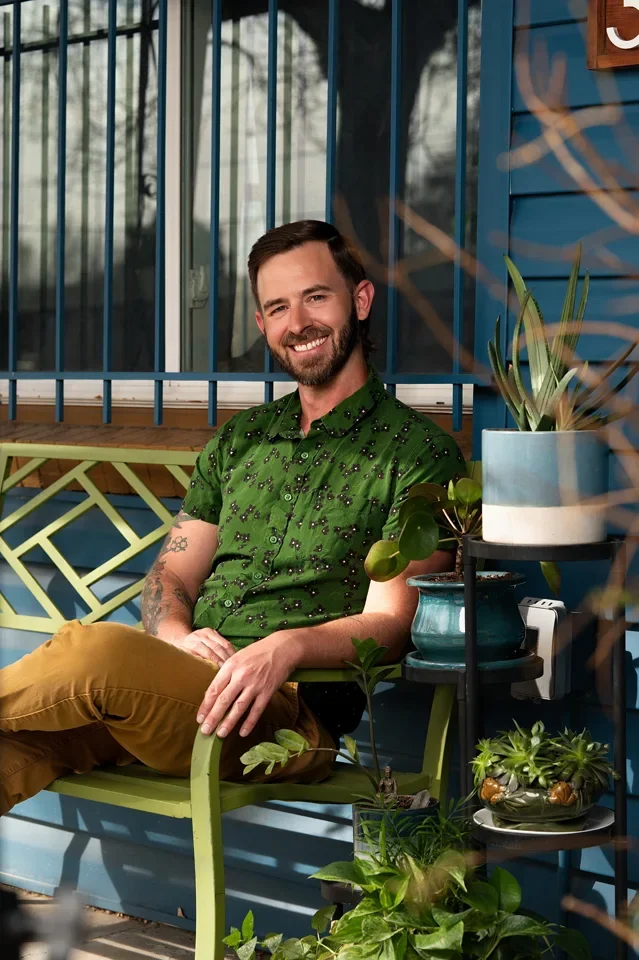
I started grad school in the midst of the most trying time in my life: a horrible break up, moving into a crappy apartment with no money, losing both of my dogs, fairweather friends, a life-threatening disease, and almost losing my job and failing out of school because I was struggling to function. Depressive episodes can rob us of everything, and the pressure to maintain only makes the depression worse. I ultimately went on to complete grad school and managed to find contentment, happiness, and purpose in a life that feels like it’s always working against us. Helping others heal from depression gives meaning to these and other terribly difficult experiences I’ve clawed my way through.
- Adam Stanford, LPC, LAC Gottman Method I EMDR I CBT I DBT I Licensed Addiction Counselor I Licensed Professional Counselor
Telehealth therapy services online in Colorado & Florida

How I Work
An in-depth approach that really treats depression.
By combining the rational thinking of CBT, the self-soothing skills of DBT, and the power of EMDR you can stop depression from taking over your life.
-
Rewire the thinking that keeps you stuck.
We identify the harmful thoughts and underlying beliefs fueling your shame, self-blame, anger, and fear, and systematically replace them with patterns that reflect reality instead of old conditioning. It’s not toxic positivity, it’s realistic and constructive thinking.
-
Build skills for the moments that hit hardest.
Being more present and aware, getting through intense emotions without making things worse, tilting the scales towards more happiness and contentment, and resolving issues between you and other people. Practical tools for riding out panicky moments, managing fear and shame without self-destruction, and holding your ground in relationships without abandoning yourself.
-
Resolve trauma at the root.
EMDR helps your brain finish processing memories that got stuck when they happened. If you understand your patterns but still feel hijacked by them emotionally, EMDR often provides the missing piece that talk therapy alone can't shift.
FAQ
Questions people ask before starting depression treatment.
-
Sessions are $225 each (53 minutes). I also offer sliding scale options on a limited basis. I am an out-of-network provider. I prioritize specialized care for my clients, which allows me to work without the restrictions of insurance companies. I provide monthly superbills that you can submit to your insurance for potential reimbursement. I've partnered with Thrizer to handle that process automatically, which typically saves clients around 70% upfront. You can check your benefits in under a minute here.
-
There are a few different ways of understanding depression:
Nearly everyone feels sad on a regular basis, and that’s healthy. Depression is more persistent and nagging than the sadness most people experience. It gets in the way of enjoying your life and feels like a real challenge.
Major depression is episodic. You’re usually content or happy, but you have episodes where you feel so sad or listless that you seem like a different person and can’t keep up with life’s demands like you normally do.
Persistent depression, also called dysthymia, is when it seems like most other people are just a bit happier and more content than you overall. It feels like you “should” be in a better mood each day, but it’s not causing a huge impairment in your life.
Some people have double depression, meaning a combo of both major and persistent.
-
I do not push toxic positivity, and I’m going to be very real with you here. Depression can be a real beast, and part of depression recovery is learning how to live with it. Some people will put it behind them forever, but others will never eliminate it entirely- it seems they just aren’t wired that way. But either way, the right treatment can help you resolve painful memories, find more joy and satisfaction, improve self-esteem, and build a life that you really believe is worth living.
-
I won’t lie, this doesn’t change overnight. But you’ve already spent enough time dealing with anxiety, and continuing like this has its own cost. I make the process easier by providing structure, clear direction, and practical tools that keep you moving forward. When anxiety is treated directly and systematically, clients often find it becomes more manageable than they even expected, and eventually stops running the show altogether.

Ready to find more joy and motivation?
If what you've read here resonates, let's talk. Schedule a free consultation to see if this feels like a good fit.